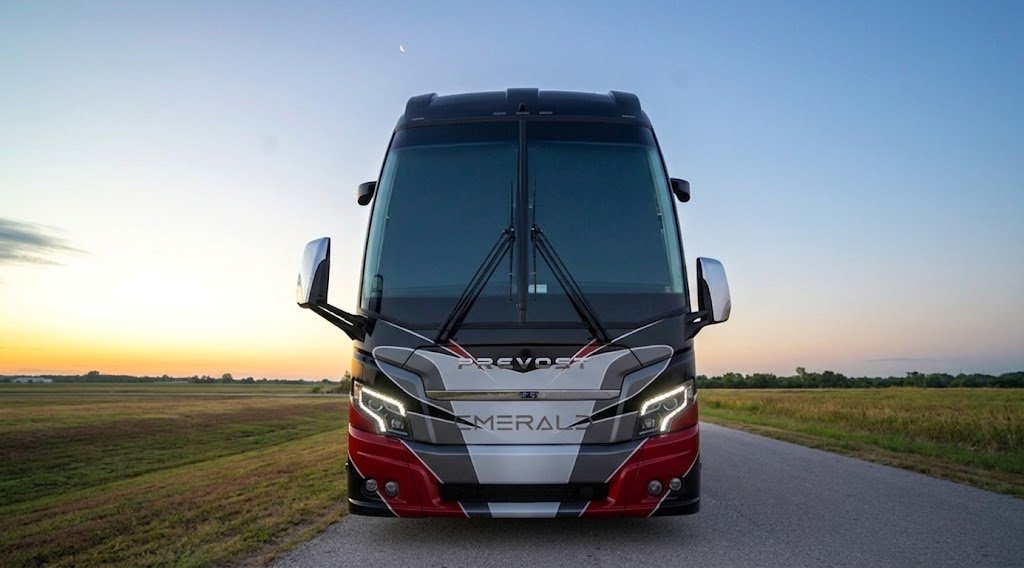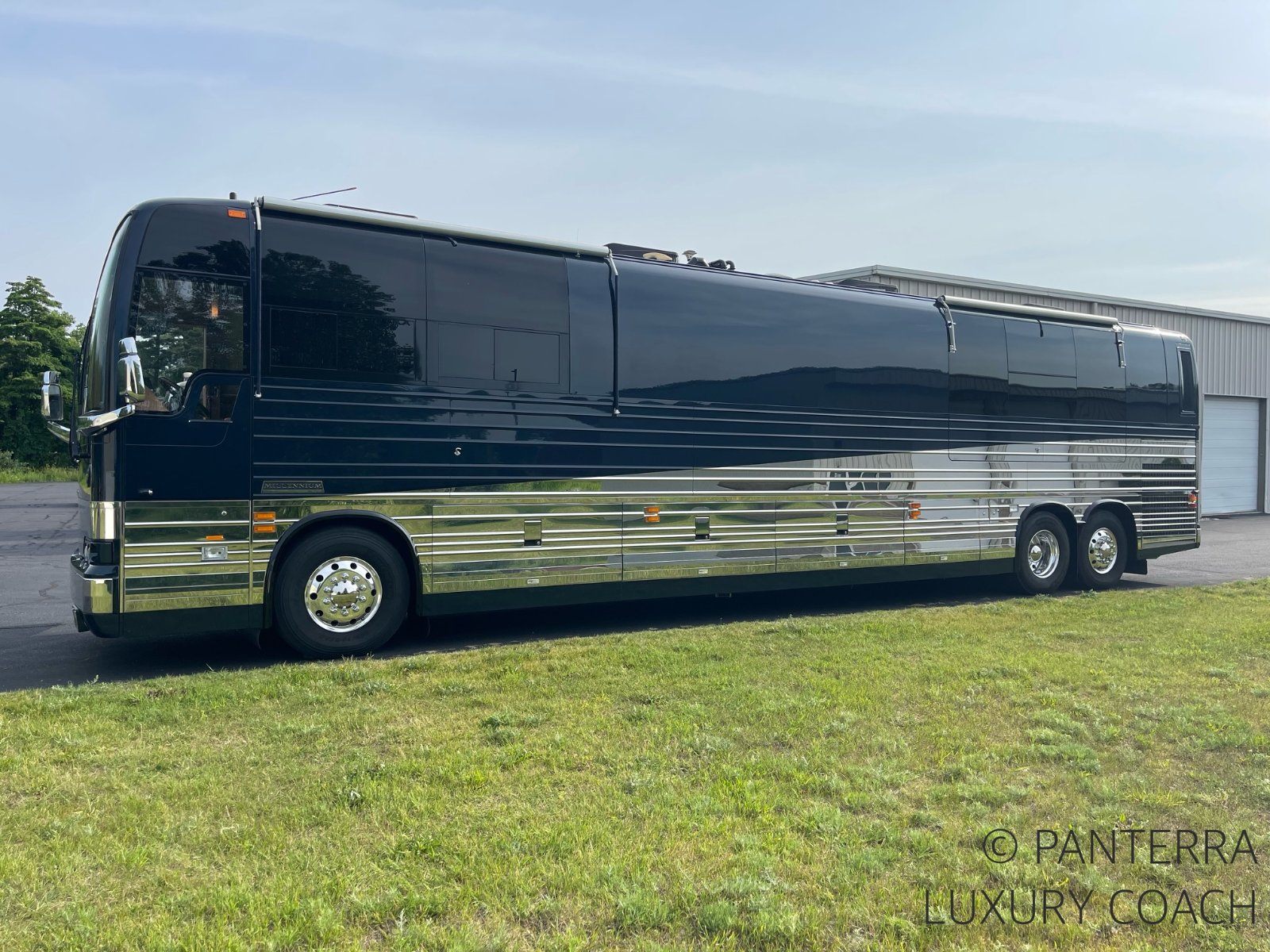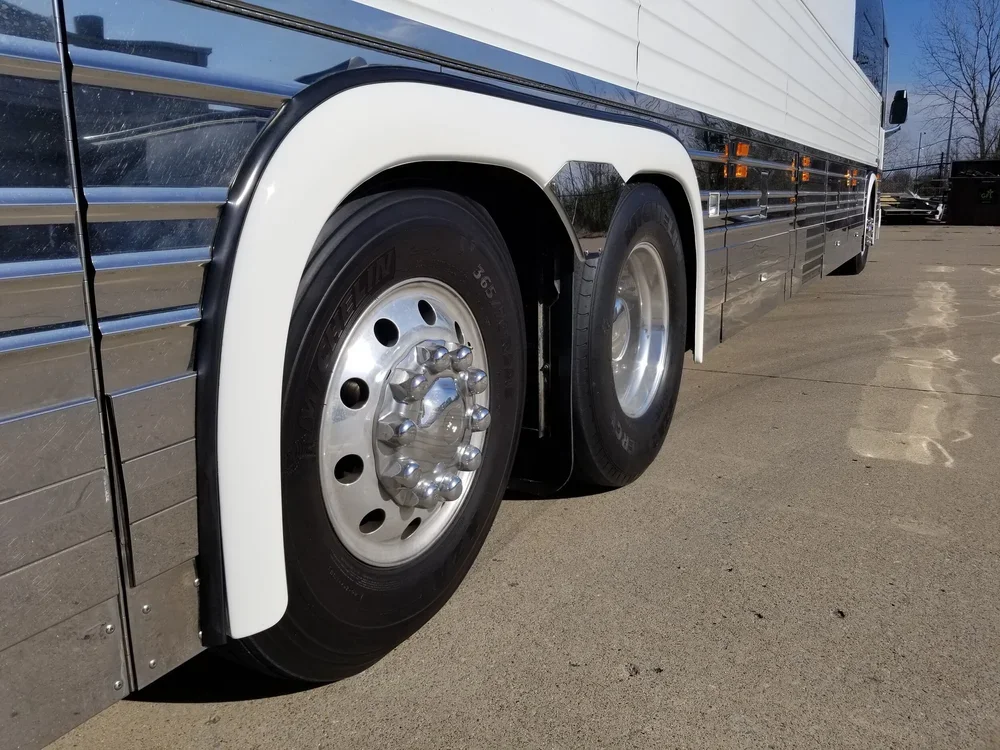
Tires weren't something I thought hard about until the first time I priced out a full set for the coach. Commercial-grade 22.5s, a delivery date, an install quote, and a total that made me sit down for a second. It's the kind of number that makes you want to default to whatever the last owner ran and never think about it again. But a coach this size, carrying this much weight at highway speed, isn't the place to buy on autopilot. So I did what most of us end up doing eventually: I went looking for what other Prevost owners actually run, not what the brochure says I should buy.
The primary source here is the Prevost Owners Group on Facebook, 7,600-plus members and one of the better places to get an honest answer instead of a sales pitch. I cross-referenced that against iRV2 threads and manufacturer documentation, and a reasonably clear picture came together.
Two things worth saying before we get into it.
First, this is a compilation of owner opinion, not a specification. The people in these threads have decades of miles between them and their experience is worth more than most marketing copy, but they're describing what worked on their coach, with their weights, their storage situation, and their driving. None of that is a substitute for your own load tables, your converter's guidance, and a real conversation with someone who mounts these for a living. Weigh your coach. Check the placard. Then decide.
Second, this topic runs hot, and it's worth understanding why. Tires are the one component where the failure mode is genuinely serious and the replacement cost is genuinely painful, so when someone recommends a brand or an age limit, they're usually defending a decision they made carefully and had to live with. I've tried to represent the range of what owners actually say here, including where they flatly disagree, rather than pick a winner and pretend the argument is settled.
Most owners land on Michelin. But it's more nuanced than "just buy Michelin," and a couple of things in these threads changed how I think about my own tires entirely.
Why coach tires aren't like anything on your truck
A Prevost runs real commercial 22.5-inch rubber, the same category as an over-the-road semi, just built for a coach's weight distribution rather than a trailer's. Steer tires and drive/tag tires do genuinely different jobs.
Steer tires carry the front weight and handle steering forces, so they need a stiffer, more precise casing. Drive and tag tires deal with traction, load, and a share of braking depending on your axle configuration, so they're built with a different tread compound and block pattern entirely. You can't buy six of the same tire and call it done. Putting the wrong category in the wrong position shows up as uneven wear or a bad ride long before it shows up as a safety issue.
Age matters more than tread depth
Here's what surprised me most digging through the Prevost Owners Group: nobody up there argues about tread wear. They argue about age.
Michelin's own published guidance says tires should get a specialist inspection annually once they hit the five-year mark from the manufacture date, and that anything past ten years should come off as a precaution, regardless of how much tread remains. One owner in the group got that answer straight from Prevost in writing: annual inspections after year five, a hard cap at ten years from manufacture, assuming the coach is driven regularly and tires are properly maintained.
That "driven regularly" part isn't a throwaway line. A shop owner who posts frequently in the group (he runs a Prevost sales and service business) has been warning people for years that the steer tires specifically need regular heat-and-cool cycles to keep their internal bond intact. He posted photos of a steer tire that failed well within what owners assumed was a safe window, because the coach had been sitting. The advice echoed by several long-time owners: drive the coach at least an hour every six to eight weeks, even if you're not going anywhere.
One owner's rotation routine, described plainly: new tires on the steer axle every two years, old steers moved back to the tag position where demands are more forgiving, worn-out tags retired. Simple, and it keeps the newest rubber where the most critical job is happening.
What owners are actually buying, by position
Position | Tire | What owners say |
|---|---|---|
Steer | Michelin XZA3+ Evertread | The community default. Dual-compound tread, backed by Michelin's warranty program (7 years standard, extendable with annual inspections). Premium price, but it's what most coaches roll off the lot with. |
Steer | Michelin X Coach HL Z | Michelin's coach-specific steer option, less discussed than the XZA3+ but built for exactly this application. |
Steer | Continental HSR2 | Marketed directly at the bus/RV steer position. A legitimate alternative, but owners specifically warn against confusing it with Continental's Urban HA3, which is a city-transit tire capped around 68 mph with sidewalls built for curb scrubbing. Wrong tool for highway miles. |
Steer | Toyo M177 | The value alternative that keeps coming up favorably. Noticeably cheaper than Michelin, with owners who've switched reporting no regrets after a full season of highway miles. |
Drive / Tag | Michelin XDA5+ / XDN2 | The other half of the default Michelin setup. Where rotated-down steer tires often end up on coaches running the two-year steer replacement approach. |
Drive / Tag | Toyo M143 | Classified as a "regional" tire rather than long-haul, but regional tires trade a bit of maximum highway mileage rating for a tougher casing and sidewall. A fair trade for a coach that isn't racking up trucking-level annual miles. |
Drive / Tag | Continental HDR2+ | Continental's commercial drive tire. Less discussed in RV circles specifically, but a known, reputable option in the 22.5 world. |
The practical stuff nobody puts on the spec sheet
The size matters as much as the brand. Whatever you're running, 315/80R22.5 is common on the drive and tag positions for a lot of coaches, and owners in the group repeatedly flag that it's a genuinely hard size to find at 10 p.m. on a Sunday outside a mid-size town, especially during peak travel weekends. More than one thread is just people stuck roadside waiting on a replacement.
- Know Michelin's commercial roadside line
1-800-TIRE-911. Several owners recommend calling this directly instead of routing everything through a general roadside assistance provider when you need a 22.5 on a Sunday night.
- Map your tire shops before you go
Knowing which shops within a few hours of your usual routes stock your size is basic trip prep for owners who've been caught without a source. Carrying a spare if you have the bay space is the other option.
- Find the DOT date code, not just the tread gauge
The four-digit DOT code on the sidewall gives you the week and year of manufacture. On any used coach purchase, check it before you close the deal. A tire with 80% tread and a 2012 DOT code is already past Michelin's recommended service life.
If you're shopping for a used coach and want to understand what the overall maintenance and ownership picture looks like, the Prevost Emerald price guide covers how documented service history affects coach value, and tires are part of that picture. For the stops where you'll actually use the coach, the Love's RV stop guide for Prevost owners covers which locations have the service bays and facilities that work for a 45-foot coach.
A tire that looks perfect can still be a liability if it's spent three winters parked without a heat cycle. Age wins that argument every time.
The bottom line
Michelin XZA3+ on the steers, XDA5+ or XDN2 on the drive and tag, inspected annually after year five, replaced by year ten regardless of tread. That's what the majority of this community runs, and there's a reason it's the default.
If budget or availability pushes you toward Toyo or Continental, the research and owner experiences both say you're not settling for less. You're making a legitimate, well-supported choice, as long as you're matching the right model to the right position and not just chasing the lowest price per tire.
The bigger takeaway isn't which brand to buy. It's how much the age-and-usage side of this matters compared to how much time most people spend worrying about tread pattern. A slightly higher price on the right model is nothing compared to what a blowout at speed costs you, in dollars or otherwise.
What's on your coach right now, and how's it holding up? Especially interested if you've made the jump away from Michelin, or if you've got your own rotation routine.
Frequently Asked Questions
What tires do most Prevost owners run on the steer axle?
The Michelin XZA3+ Evertread is the community default for the steer position, and it's what most coaches ship with from the converter. The Continental HSR2 and Toyo M177 are the most commonly discussed alternatives. Both come up favorably in the Prevost Owners Group among owners who've switched away from Michelin due to pricing or sourcing issues.
How long should tires last on a Prevost coach?
Michelin's published guidance recommends a specialist inspection every year starting at the five-year mark from the tire's manufacture date, and recommends replacing tires by the ten-year mark regardless of remaining tread depth. Prevost has provided similar written guidance to at least one owner in the community. Tread depth is a secondary concern. Age and heat-cycle history are the primary factors.
Can I run the same tire on all six positions?
Yes and No. Steer tires and drive/tag tires are engineered for different loads, forces, and wear patterns. Running a drive tire on the steer axle, or vice versa, will produce uneven wear and handling issues before it produces a visible safety problem. Match the tire model to the axle position it's designed for. However, noted by some readers, they will run the same tires all the way around.
What's the right tire size for a Prevost H3-45?
315/80R22.5 is the common size on the drive and tag positions for most H3-45 coaches, though the exact spec depends on the converter build and any modifications made to the coach. Always confirm the correct size on the sidewall of the existing tires and cross-reference with the coach's load ratings before ordering replacements.
Does a Prevost need tires even if it sits mostly in storage?
Yes, and this is where a lot of owners get surprised. Steer tires particularly need regular heat-and-cool cycles to maintain their internal bond. A tire that's spent months or years stationary can fail before it hits the age or wear thresholds you'd expect. Several experienced owners in the Prevost Owners Group recommend driving the coach at least an hour every six to eight weeks, even if you're not traveling.
Is Toyo a legitimate alternative to Michelin for a Prevost?
Yes, with the right model in the right position. The Toyo M177 on the steer axle and the M143 on drive and tag positions both come up positively in owner discussions, with people reporting no regrets after full seasons of highway miles. The key is not confusing the model lineup. Toyo makes tires for a wide range of commercial applications, and putting a regional or urban-rated tire in the wrong position is where problems start.
What should I check on tires when buying a used Prevost coach?
Find the four-digit DOT date code on the sidewall of each tire. It tells you the week and year of manufacture. A tire with significant tread remaining but a manufacture date of 2014 or earlier is already past Michelin's recommended service window. Also confirm tire type matches axle position, and ask about the coach's storage and usage history, since extended stationary periods without heat cycles affect tire integrity independent of age or wear.